.png%3Falt%3Dmedia%26token%3D9b3b61a7-f89e-4833-bc49-6f94a9f28aaa&w=3840&q=75)
NatureHelm and New Forests put the Nature Positive Initiative's State of Nature metrics to the test across selected assets in five countries. The pilot shows what satellite data can and can't measure at scale, why landscape connectivity became the metric stakeholders cared about most, and what it means for measuring nature across a 4.4-million-hectare portfolio and for TNFD disclosure.
The NatureHelm team and the New Forests team recently sat down with the OneStop ESG editorial team for an in-depth conversation on their pilot of the Nature Positive Initiative (NPI) State of Nature metrics, a multi-country test of what nature reporting looks like when it is grounded in scientific rigour and applied at portfolio scale. The case study that follows is drawn from that discussion.
Investor questions about portfolio-level biodiversity
New Forests, an asset manager with approximately 4.4-million-hectare portfolio across forestry and agriculture, had a problem its investors were increasingly raising: what is the State of Nature across the entire portfolio? Project-by-project case studies illustrate individual interventions (for example, invasive species programmes and site-specific restoration), but they could not be consolidated or compared.
“We weren’t able to answer the question from our investors in a holistic way about what is the State of Nature across our portfolio when it comes to different asset types, different regions, different countries.”
Jo Saleeba, Global Head of Sustainability & Impact, New Forests
That gap is exactly the gap the Nature Positive Initiative was created to close. Launched in 2023, NPI is a coalition of 27 organisations spanning conservation NGOs, business and finance coalitions, science and Indigenous knowledge networks, and the standards and disclosure frameworks that increasingly govern corporate nature reporting, among them the Taskforce for Nature-related Financial Disclosure (TNFD), the Global Reporting Initiative (GRI), and the Science Based Targets Network (SBTN). Its purpose is to provide a globally consistent set of metrics for measuring the State of Nature, designed to be embeded within those existing frameworks and to support emerging regulatory obligations such as the EU’s Corporate Sustainability Reporting Directive (CSRD). New Forests’ pilot, designed and delivered with NatureHelm, set out to test whether those metrics could be commercially feasible to calculate at scale , across radically different geographies, in a way that produced something both investors and on-the-ground managers could trust.
The main risk was that the satellite data and methodology might not be granular enough across diverse landscapes to be useful for asset management decision making.
Pilot scope and design
The work was conducted as part of NPI’s official Piloting Programme, which ran from May to October 2025 and partnered selected corporate and financial institutions with NPI core members to test the metrics in real-world contexts. Within that programme, the New Forests pilot spanned five countries, including assets in Australia, Sub-Saharan Africa (Mozambique, Uganda, Tanzania), and the United States, and calculated the seven pilot NPI metrics across three categories: ecosystem extent, ecosystem condition, and species. Each “site” in the analysis was not a single point but hundreds, sometimes thousands, of polygons.
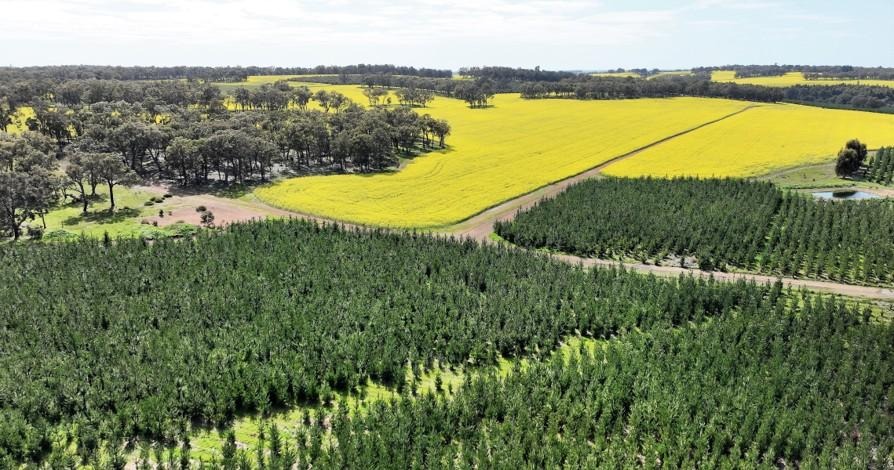
New Forests WA estate.
Images © New Forests Asset Management Pty Limited. Used with permission for editorial purposes only
What the metrics actually showed
Debbie Saunders, who led the NatureHelm methodology, walked through the architecture of the assessment. There were seven metrics all together, based around three core elements:
-
Ecosystem Extent
-
Ecosystem Condition
-
Species
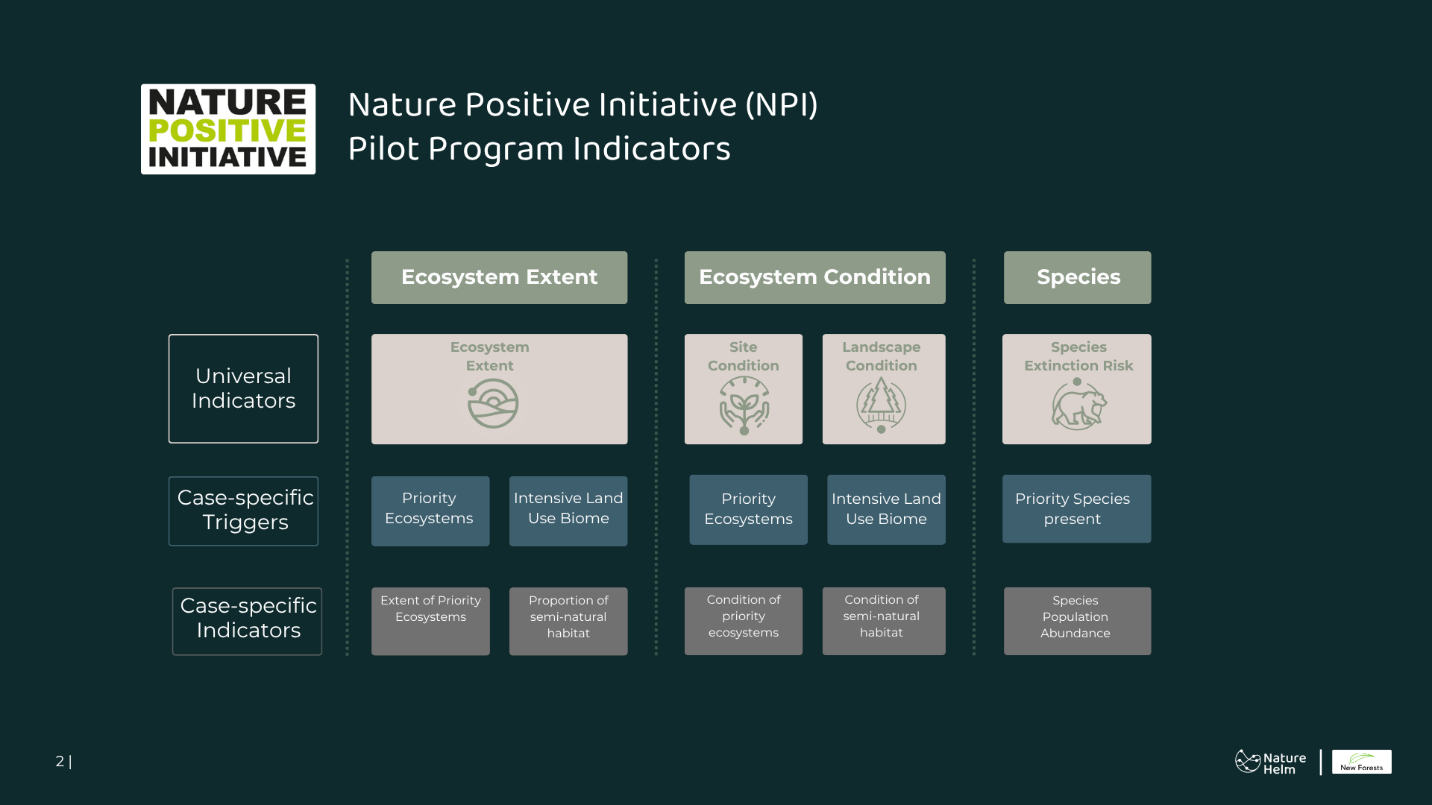
The first metric, measured the extent of natural ecosystems at each location. Within this, where a site was part of a production or intensive land use landscape, the extent of natural vs semi-natural ecosystems was required. The recommended datasets for this semi-natural classification were found to not be granular enough to clearly delineate semi-natural or forest production areas, and the associated condition of natural and semi-natural areas may be removed from the metrics following the consultation period. Saunders noted that NatureHelm has since developed a solution for this distinction, because the natural-versus-non-natural classification remains valuable for purposes beyond the NPI. NatureHelm
The condition metrics carried the most analytical weight. For site condition, NatureHelm focused on the core area of intact landscape and incorporated multiple species datasets, including threatened species drawn from Red List data and invasive species and species diversity records aggregated from public datasets and ground observations. A weighting algorithm graded each input by data quality. The output was then validated against what teams on the ground were actually observing across the five countries.
Invasive species was a particularly nuanced input. Their presence is typically a negative signal for biodiversity, but where they are actively controlled, the same data point can flip into a positive contribution to the score. Reconciling that asymmetry, and ensuring the model output matched on-ground reality, required substantial back-end testing and close collaboration with on-ground teams.
For landscape condition, the team tested the spatial scales recommended by the NPI, including a 50-kilometre buffer around each site, but settled on the catchment as the most meaningful unit of analysis. The same condition factors were then applied across the entire catchment, alongside connectivity analytics that mapped where in the broader landscape the largest risks, and the largest opportunities for collaboration or strategic acquisition, were located.
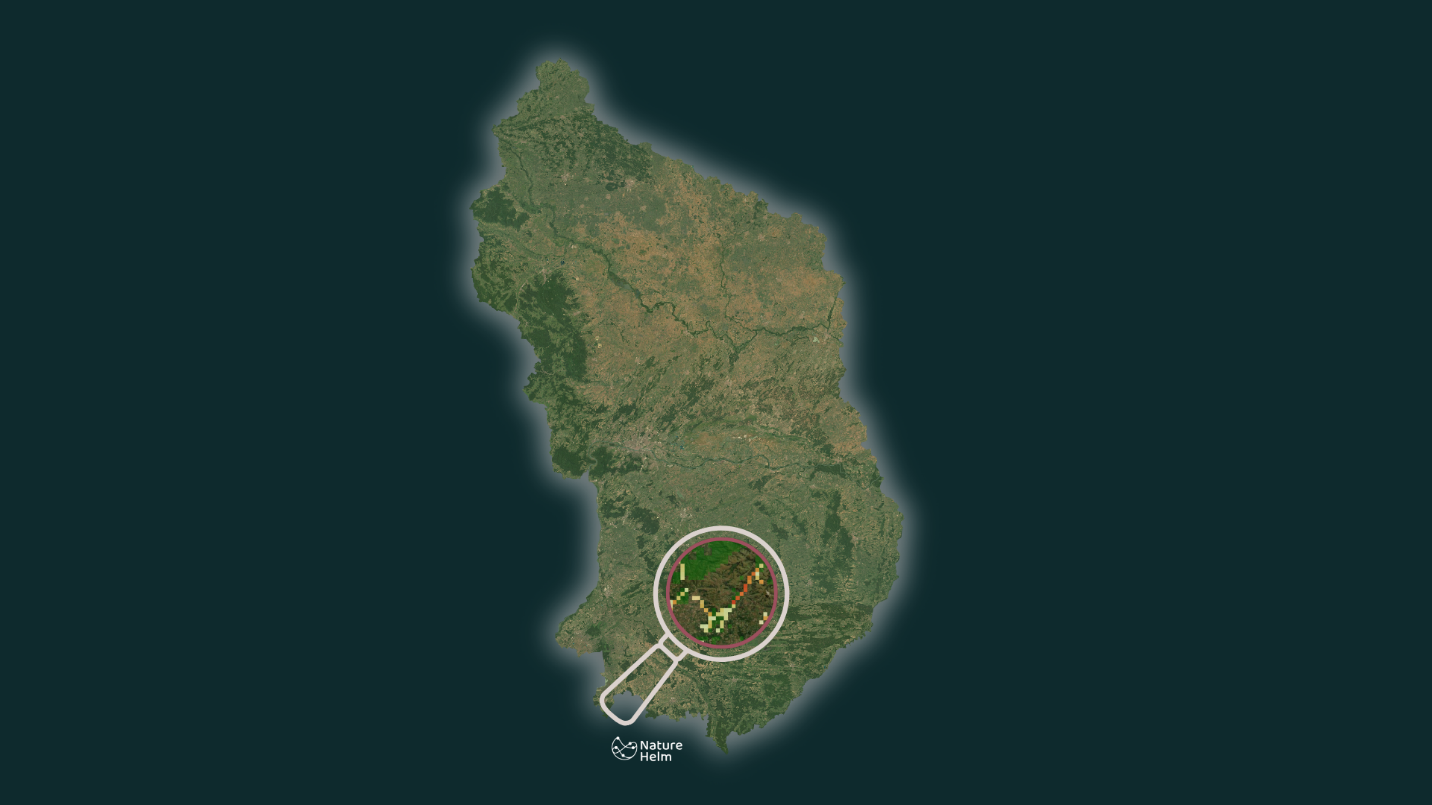
Provided by NatureHelm
The species metrics drew on a combination of IBAT STAR metrics for extinction risk and on-ground monitoring for population abundance. One limitation surfaced quickly: STAR metrics are not updated on the annual cadence businesses now require, so NatureHelm leaned on on-ground species records and habitat impacts at the site to supplement and refresh the picture. Population abundance data varied dramatically across the portfolio, from African sites with monitoring programs in the initial development phase to Australian sites with a decade of records. Therefore, the methodology was deliberately designed to function across that spectrum, using landscape-scale data to indicate what species a less-monitored site should focus on.
Why landscape connectivity is important
Stakeholders across all regions identified landscape connectivity as the metric with the highest potential to guide management decision making and collaboration between regional stakeholders.
“The connectivity piece was probably the metric that sparked the most interest across all the groups that we were working with globally.”
Emily Simso, Associate Director, Sustainability & Impact, New Forests
The reason was straightforward: it produced a direct line between data and decisions. In one striking example, the team was able to track how functional connectivity shifted in response to specific management activities such as timber harvesting, and observed changes in the on-ground data linking back to landscape-scale outcomes. By planning harvests differently, New Forests could maintain greater connectivity across the landscape for species movement. An abstract concept became an operational lever.
It was, Simso said, it was “incredible to see that we can actually get that on-ground change connected to a management activity and link it to a landscape-type outcome.”
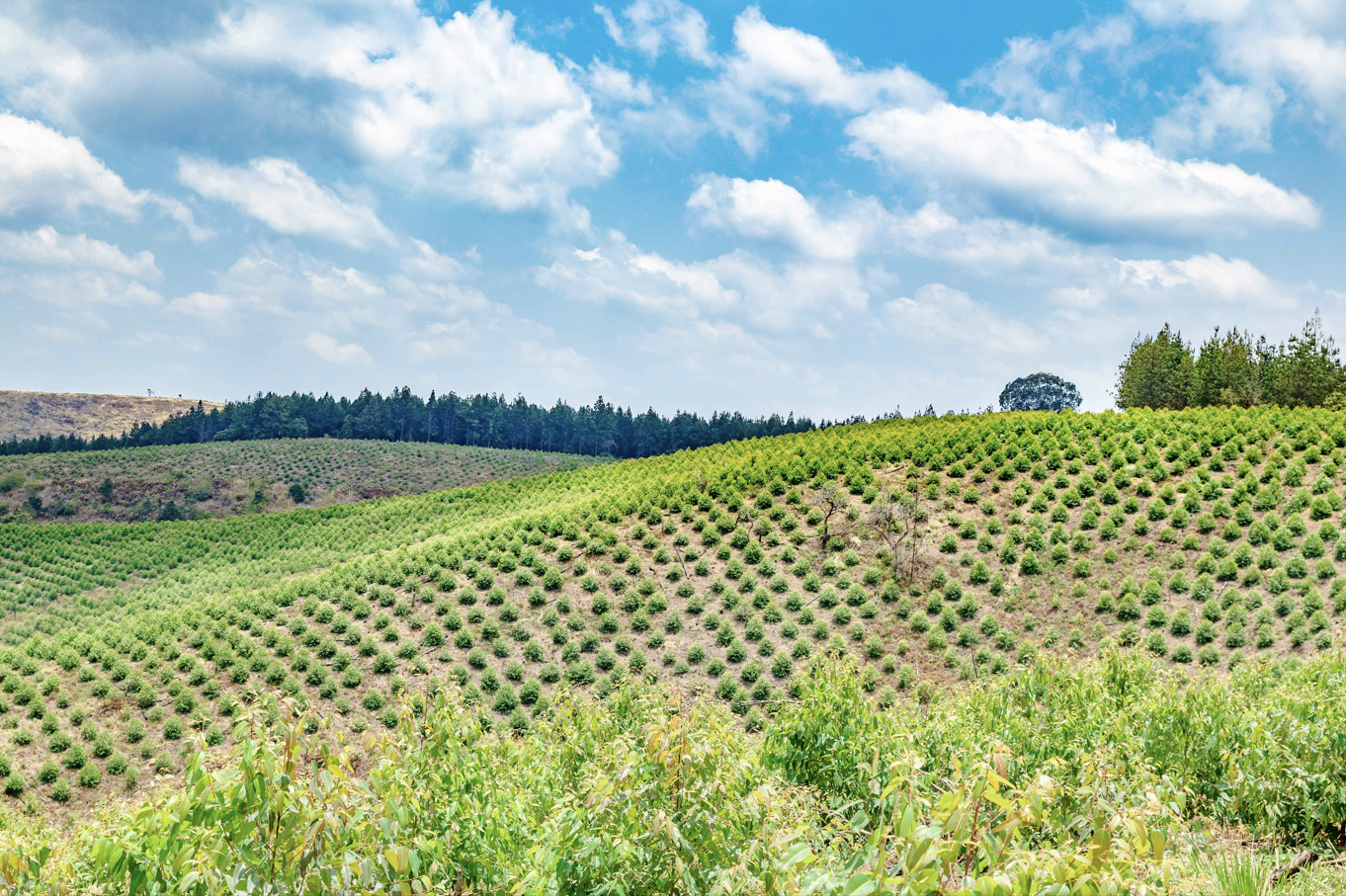
African Plantation
Images © New Forests Asset Management Pty Limited. Used with permission for editorial purposes only
Applying one method across regions
A core design principle of the pilot was that the same method had to work everywhere. Rather than building bespoke versions for each country, NatureHelm extended the platform’s flexibility as new regional needs emerged.
For example, in Sub-Saharan Africa, invasive vegetation control through slashing and burning was a routine operational activity that needed to be reflected in the condition score, and the platform was extended to capture it. Comparatively, in Australia, invasive wildlife such as feral cats and foxes demanded a different unit of measurement: individuals controlled rather than hectares cleared. The ability of the platform? to ingest information on? different types of invasive species control was built into the platform to account for these regional variations.
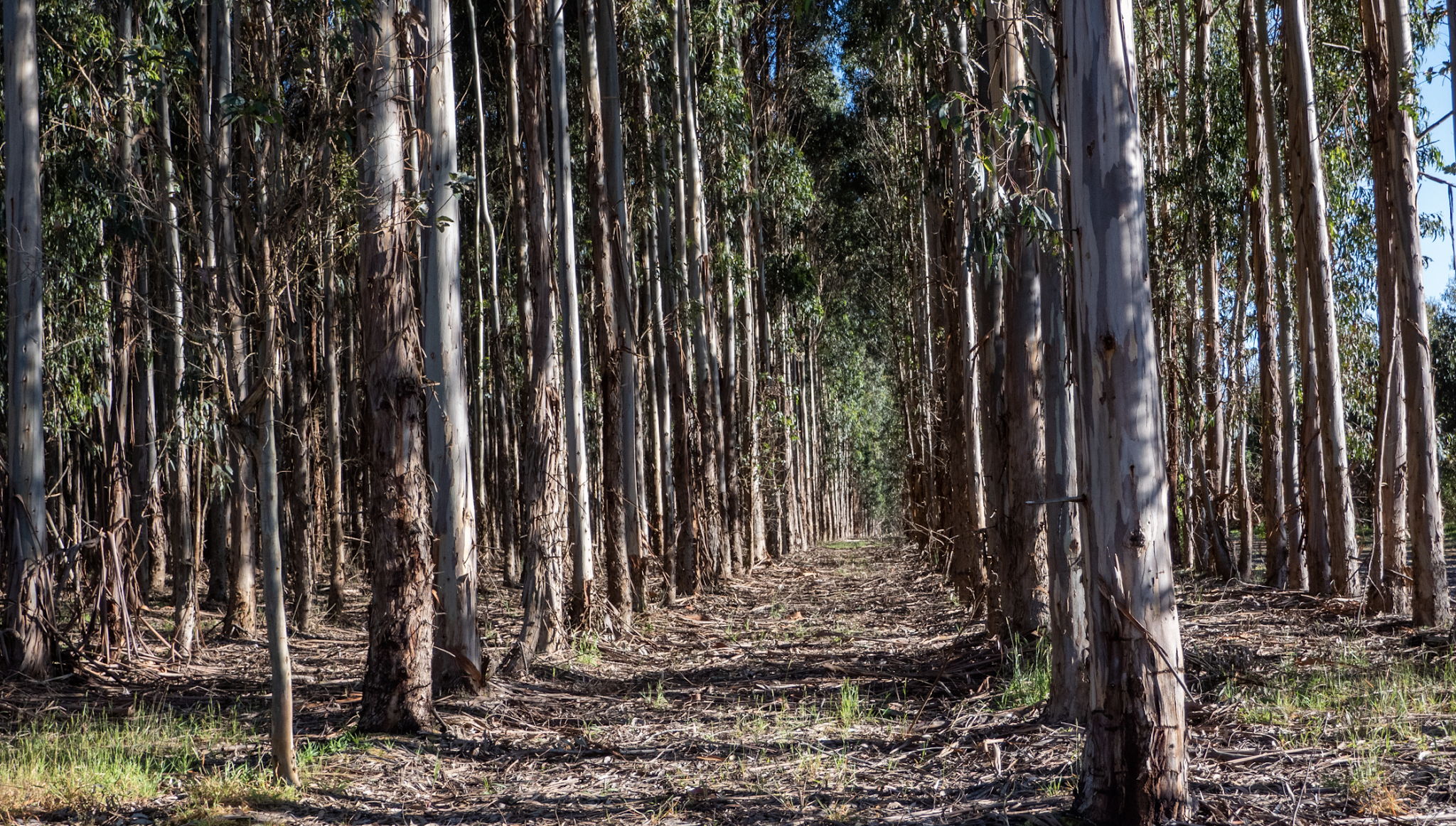
Australian Forestry
Images © New Forests Asset Management Pty Limited. Used with permission for editorial purposes only
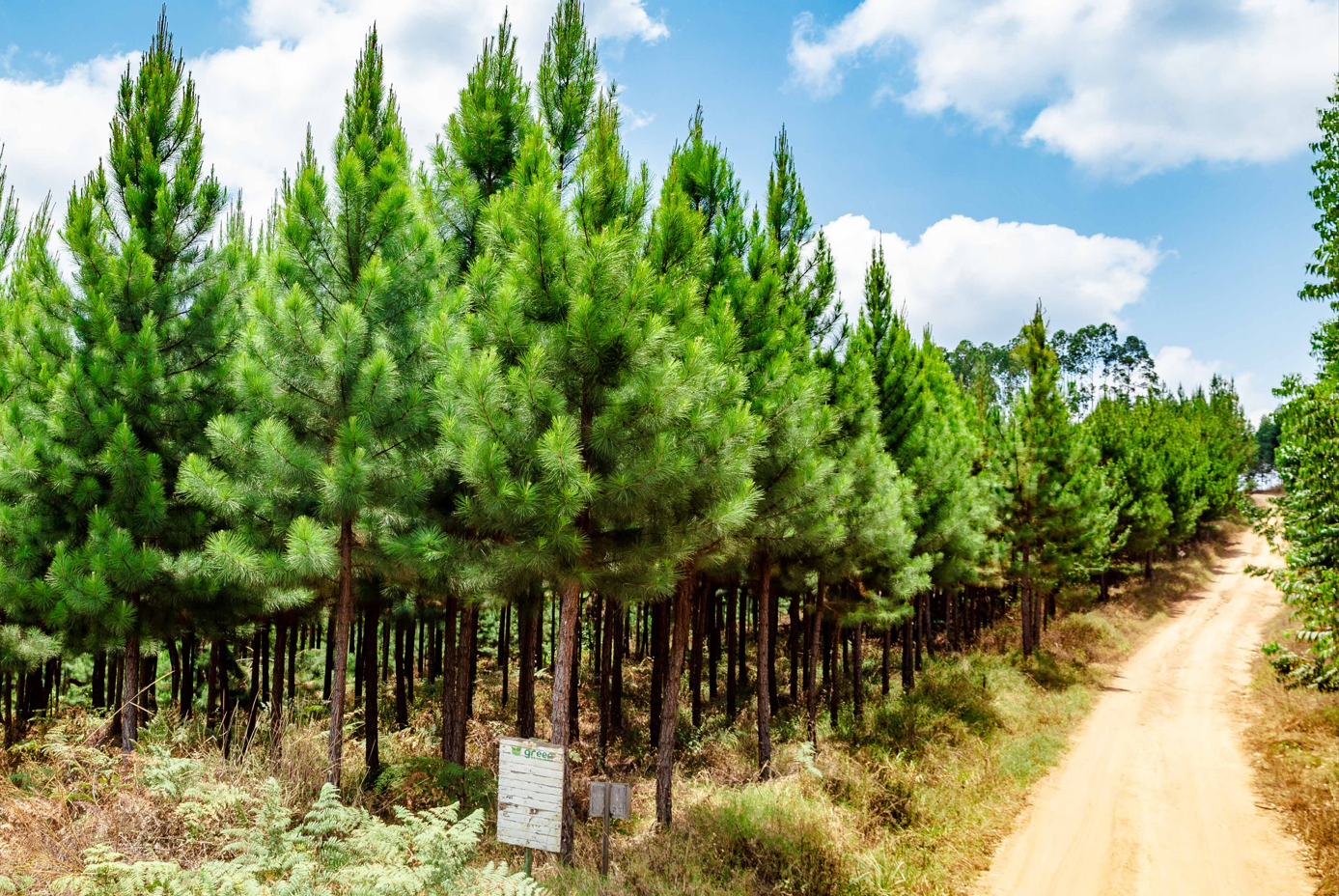
African Forestry
Images © New Forests Asset Management Pty Limited. Used with permission for editorial purposes only
The variability between sites was, in itself, one of the pilot’s key? findings. Asked which two assets were the most divergent, Simso pointed less to a binary comparison of the results and more to understanding what the range of results tells New Forests about its portfolio.
For example, the Sub-Saharan Africa pilot showed greater variability of results (e.g., a higher diversity of ecosystem conditions), while the California estate was more consistent and homogeneous. The opportunities to improve the State of Nature looked substantively different across those land-use contexts. However, it is the power of the methodology that New Forests can start comparing across regions to prioritise management activities to maintain or enhance the State of Nature.
Critically, the methodology was also stress-tested for local credibility. As part of the Western Australia pilot, New Forests and pilot partners convened a diverse group of regional stakeholders (NGOs, government, viticulture, agriculture) to interrogate NatureHelm’s results against their own expertise. The reception was the validation the team needed: a global framework, applied with regionally specific data, that local experts recognised as a useful common reference point.
NPI versus traditional biodiversity assessment
Asked what the NPI captures that traditional surveys miss (and, importantly, the reverse), neither Saunders nor Saleeba framed the answer as a competition.
“All of these things are important, and they are complementary rather than one being more important than the other.”
Debbie Saunders, CEO, NatureHelm
What the NPI unlocks, Saunders argued, is consolidation. Pure on-ground work cannot produce reporting at the company or portfolio level. Conversely, high-level model-based assessments, which characterise much of the current TNFD-aligned biodiversity tooling, are useful for initial screening but typically lack the auditability and granularity required for investment and management decisions. The pilot’s contribution was bridging those two worlds: granular, on-ground data integrated with remote sensing in a way that produces credible, traceable, portfolio-level outputs.
That credibility, Saunders said, is what investors increasingly expect. In the case when a fund manager is asking an investor to allocate capital on the strength of a nature claim, the data underpinning that claim has to be designed to support internal and external review. Having a scalable approach to State of Nature assessment supports scaling investment into credible, nature-based solutions.
Where this fits in the TNFD landscape
The timing of the pilot is notable. TNFD has long reserved a placeholder for State of Nature metrics in its core disclosure list and were one of the NPIs core members and pilot partners. The TNFD, in collaboration with the GRI and SBTN, recently released a discussion paper consulting on how the NPI’s State of Nature metrics can be embedded within their frameworks, a step that moves the placeholder closer to defined disclosure. The NPI’s own final public consultation on the State of Nature metrics framework closed in March 2026, and the metrics are now moving toward finalisation, with adjustments informed by consultation results and ongoing technical discussions among partners.
In LEAP terms, the State of Nature metrics calculated through NatureHelm are most directly useful at the Evaluate stage, where they assess the impacts an asset has on nature, both positive and negative. But Saunders argued that the more pressing gap in TNFD adoption sits further down the framework.
“A lot of people have done the TNFD assessment, they get to the end of their first run-through of the full LEAP, and they’re like, ‘so what do we actually do now?’”
Debbie Saunders, NatureHelm
Neither team thinks that current TNFD adopters are “getting it wrong.” As Simso put it, nature is big, nature is complicated, and everyone’s processes are still continuously evolving. From Saunders’ experience engaging with global companies across the finance, asset management and agribusiness sectors, they are now able to navigate the initial TNFD process at a high level, but they often don’t how to move beyond this to actionable insights on the ground. The integration of NPI metrics, including site-specific species information, is what turns the placeholder ambition into something operationally meaningful.
NatureHelm itself extends beyond the NPI: it includes a dependency and impacts component and translates sector-level frameworks such as Encore into species-level analysis at specific sites. That bridge between high-level sector dependencies and granular on-ground data is, in practice, where many companies stall after their first LEAP cycle.
Scaling to 4.4 million hectares
For New Forests, the question is no longer whether the methodology works, but how it adapts as the pilot expands across the full portfolio.
Saleeba flagged data variability as the principal expectation: different assets, regions and asset types will have different levels and types of on-ground data, and the methodology has to absorb that without breaking. Use cases will also differ. The connectivity metric that captivated forestry teams may carry less weight in some agricultural contexts, where other condition or species indicators may become more decision-relevant.
Simso noted that New Forests’ agricultural and livestock assets will introduce land-use contexts the forestry-focused pilot did not fully cover, and the team is interested to see what that analysis produces. The inputs to the metric calculations may look different and the findings that resonate with management teams could shift.
From a technical standpoint, Saunders identified two ecosystem types as the genuine frontier challenges: arid savannah landscapes, where data variability is high, and tropical zones, where persistent cloud cover degrades remote sensing reliability and forces a search for alternative data sources. New data products that have emerged in the short period since the pilot closed are already being tested to address both.
Notably, Saunders pushed back gently on the framing of “scaling” itself. Many pilot projects in this space have been single-site or two-site demonstrations. The NatureHelm pilot worked across hundreds to thousands of polygons per site from the outset.
“We’ve already scaled it up. Now we’re just applying it to different ecosystems.”
Debbie Saunders, CEO, NatureHelm
Investor reporting at portfolio level
For New Forests, the long-term value of the NPI integration is the ability to tell a complete and credible portfolio-level story to investors, including the parts that historically have been harder to communicate.
Saleeba was direct on this point. In forestry and agriculture, the business model involves harvesting a crop, whether a tree or an agricultural commodity, and that has impacts. Rather than presenting investors with a curated set of good-news stories, the team wants the credibility to acknowledge those impacts while showing, with consistent metrics, where the portfolio is creating positive change and where impacts still need to be managed.
That balanced framing, neither greenwashed nor defensive, is what consistent, scientifically grounded metrics are starting to make possible at portfolio scale.
Key takeaway
If the pilot offers one signal for asset managers and TNFD reporters watching from the sidelines, it is this: the scientific and technological pieces required to measure State of Nature credibly, consistently, and at portfolio scale are now in place. The remaining barriers are organisational. The gap is between completing a LEAP assessment and knowing what to do next.
Asked what a single takeaway would be for someone reading this case study, Saunders went straight to that gap.
“A lot of companies don’t know where to start. Some assets were brand new and just beginning, and others were really established. This pilot demonstrated that we now have a way to help companies track the State of Nature at any stage of their nature journey.”
Debbie Saunders, CEO, NatureHelm
The pilot demonstrates that the scientific and technological tools are ready; the remaining barriers are organisational.
About this case study
This case study describes a pilot conducted as part of the NPI Piloting Programme using draft “State of Nature” metrics under development by the NPI. The metrics referenced were tested during the pilot phase and are subject to ongoing consultation and refinement. The NPI metrics have not been finalised at the date of publication.
Nothing in this case study is intended to, or should be taken to, represent that New Forests, NatureHelm or any portfolio asset is compliant with, or has satisfied, any current or future regulatory, TNFD, CSRD or other sustainability-related disclosure, reporting or assurance requirement.
NatureHelm was responsible for the design and operation of the pilot methodology described in this case study. New Forests’ role was limited to participation in the pilot and the provision of site-level data and operational insights. References to methodologies, metrics or analytical outputs should not be taken as endorsements by New Forests of any final metric design or future framework.
Authors of the Case Study
Dr. Debbie Saunders, Co-Founder & CEO of NatureHelm
Dr Debbie Saunders is the Co-Founder & CEO of NatureHelm, with a PhD in Conservation Ecology and over 25 years experience translating biodiversity research into innovative technological solutions and large-scale ecosystem restoration projects. This includes NatureHelm’s award-winning biodiversity intelligence platform, used by finance, asset management and agribusiness companies across 14 countries to help them understand and manage their interface with nature.
Jo Saleeba, Global Head of Sustainability & Impact, New Forests
Jo Saleeba is the Global Head of Sustainability and Impact for New Forests, primarily responsible for overseeing the management, execution, and continuous improvement of New Forests’ sustainability and impact investment-related policies, systems, reporting and procedures. Jo has a distinguished career in responsible investment as an institutional investor. She was the inaugural CEO of the Investor Group on Climate Change (IGCC) in Australia, and has extensive experience with some of the most progressive superannuation funds, and with corporate and investment clients in her own consulting business. Jo has a Bachelor of Commerce (Honours) from the University of Melbourne, and a Master of Environmental Science from Monash University.
Emily Simso, Associate Director, Sustainability & Impact, New Forests
Emily Simso is part of New Forests’ Sustainability & Impact team and contributes to the delivery and continuous improvement of the organisation’s sustainability and impact investment-related policies, systems, and reporting. Based in Sydney, Emily advances the execution of New Forests’ sustainable investment strategy, leads New Forests’ approaches to climate and nature, and manages the administration of the Sustainability & Impact Management System. Emily’s prior experience includes working as the inaugural responsible investment associate for her university’s endowment, conducting sustainability analysis on private equities in emerging markets, and urban ecology research. She has a Bachelor of Science in Biology from Loyola Marymount University.
Note: The TNFD discussion paper is open for stakeholder consultation until 4 June 2026, with final guidance expected later in the year.
Subscribe to our newsletter for more insights, case studies, and ESG intelligence.
Keep abreast of the top ESG Events on OneStop ESG Events.
OneStop ESG Educate: Your go-to source for top ESG courses and training programs tailored to your needs.
Stay informed with the latest insights on OneStop ESG News.
Discover meaningful career opportunities on OneStop ESG Jobs.


Comments
Have a thought on this? Share it with other readers.