Name
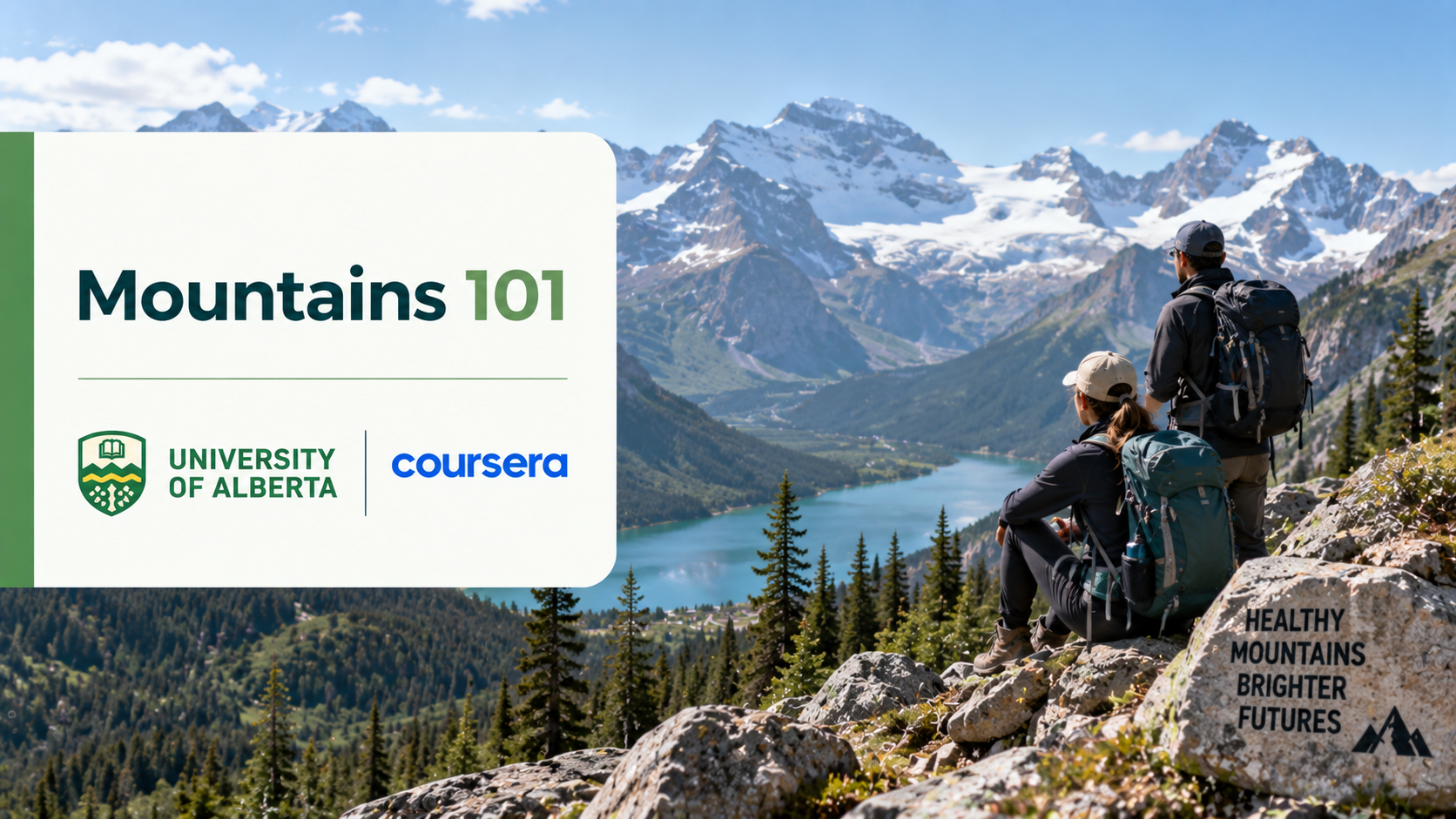
Mountains 101
Difficulty Level
Beginner
Certification
Yes
Ongoing
Offered By
University of Alberta
Paid
Course Details
Mountains 101, offered by the University of Alberta through Coursera, is a beginner-level online course providing a broad interdisciplinary introduction to mountain environments. The course examines the physical, biological, and human dimensions of mountains in Alberta, Canada, and around the world, helping learners understand how mountains form, function, support biodiversity and water systems, shape cultures, and respond to climate change. No prior background is required.
Core Content
The course is structured across twelve modules covering why mountains matter, mountain formation, climate, human physiology at altitude, hydrology, glaciers, cultural perceptions, natural hazards, plant and animal adaptations, mountain use and preservation, and future climate impacts. Learners also examine biodiversity, water resources, avalanches, landslides, conservation, and changing mountain ecosystems while connecting scientific concepts with human history and environmental management.
Key Skills
Participants will develop the ability to explain major mountain processes, assess the ecological and cultural importance of mountain systems, and understand how climate change affects mountain environments. The course also builds knowledge in hydrology, biodiversity, natural resource management, environmental science, hazard analysis, climate adaptation, physiology, cultural diversity, and risk management.
Target Learners
This course is designed for students, outdoor enthusiasts, sustainability and environmental learners, and anyone interested in mountains, climate, ecology, or natural resource management. It is particularly useful for learners seeking an accessible introduction to mountain studies without a specialist scientific background. The University of Alberta states that no prior knowledge is required and that the course is open to all learners.
Learning Format
Hosted on Coursera, the course is delivered in a flexible online format with twelve modules and an estimated completion time of two weeks at around ten hours per week. Each lesson includes interactive lecture videos, course notes, recommended readings, additional resources, and an assessment, while practical “Tech Tips” introduce topics such as hiking preparation, navigation, avalanche safety, camping, and mountain ethics. Coursera also notes that the course includes twelve assignments, is taught in English with 22 language options available, and offers a shareable certificate.
Additional Benefits
The course combines academic study with practical mountain-safety guidance, giving learners both environmental knowledge and useful skills for spending time in alpine environments. Lessons are filmed in locations ranging from laboratories and museums to mountain valleys, alpine huts, and high-elevation settings, with contributions from a range of experts. University of Alberta students can also take an associated version of the course for academic credit.
Browse more ESG courses and certifications to enhance your skills and knowledge.
ESG Educate
Unlocking Opportunities
Dive into the world of ESG Events, where you can discover crucial gatherings that shape the future of sustainability. From insightful conferences to interactive workshops, these events offer invaluable opportunities to stay informed, connect with industry leaders, and drive impactful change. Whether you‘re seeking to enhance your ESG strategy or stay ahead of regulatory trends, participating in these events is essential for staying at the forefront of sustainable practices and innovation. Join us in shaping a more sustainable future through knowledge sharing and collaborative action at ESG Events.