Name
Electrification of Building Energy Systems
Difficulty Level
Intermediate
Certification
Yes
Ongoing
Offered By
University of Colorado Boulder
Paid
Course Details
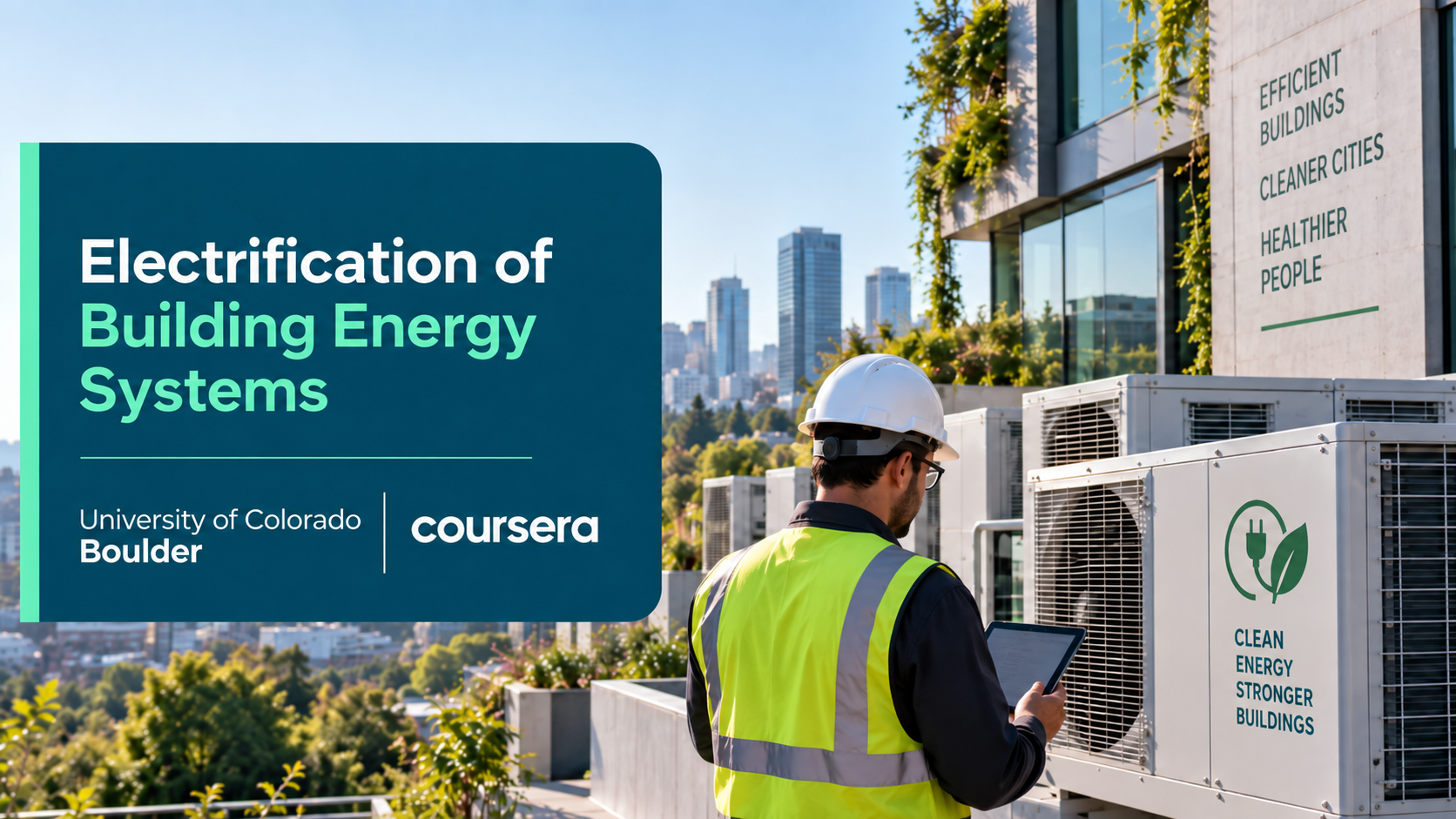
Electrification of Building Energy Systems, offered by the University of Colorado Boulder through Coursera, is an intermediate-level online course focused on the transition from fossil-fuel-based building systems toward efficient, electrified, and grid-responsive alternatives. The course examines how building energy design is changing in response to decarbonization goals, with particular attention to heat pumps, low-energy technologies, and the integration of buildings with increasingly renewable electricity systems.
Core Content
The course is structured across six modules covering emerging trends in building energy systems, low-energy technologies, heat pump applications, building-to-grid integration, a comprehensive design example, and a final assessment. Learners examine energy recovery, evaporative cooling, economizers, passive cooling, air- and ground-source heat pumps, thermal energy storage, smart controls, virtual power plants, and the design of electrified HVAC systems for mixed-use buildings.
Key Skills
Participants will develop the ability to analyse low-energy technologies, evaluate heat pump applications, and assess opportunities for energy flexibility through building-to-grid integration. The course also builds skills in HVAC, thermal management, electrical systems, sustainable technologies, building design, engineering calculations, climate change mitigation, control systems, and systems design.
Target Learners
This course is designed for engineers, architects, building-services professionals, and advanced learners interested in efficient and low-carbon building energy systems. It is particularly relevant for those working in mechanical engineering, HVAC design, energy consulting, real estate development, construction, utilities, or building technology. Coursera classifies the course as intermediate level, and the wider Specialization expects prior knowledge of thermodynamics, fluid mechanics, and heat transfer.
Learning Format
Hosted on Coursera, the course is delivered in a flexible online format with six modules and an estimated completion time of three weeks at around ten hours per week. The learning experience includes videos, readings, engineering calculations, design exercises, case examples, and assignments, culminating in a two-hour final assessment. Coursera also notes that the course includes eleven assignments, offers a shareable certificate, is taught in English, and allows learners to progress at their own pace.
Additional Benefits
The course is the third course in the University of Colorado Boulder’s Building Energy Systems Engineering Specialization, which is designed to prepare learners for professional practice in the analysis and design of residential, commercial, and district building energy systems. Its comprehensive design module gives learners practical experience applying earlier concepts to an office-to-mixed-use conversion, including ventilation, hydronic systems, equipment selection, and electrification decisions.
Browse more ESG courses and certifications to enhance your skills and knowledge.
ESG Educate
Unlocking Opportunities
Dive into the world of ESG Events, where you can discover crucial gatherings that shape the future of sustainability. From insightful conferences to interactive workshops, these events offer invaluable opportunities to stay informed, connect with industry leaders, and drive impactful change. Whether you‘re seeking to enhance your ESG strategy or stay ahead of regulatory trends, participating in these events is essential for staying at the forefront of sustainable practices and innovation. Join us in shaping a more sustainable future through knowledge sharing and collaborative action at ESG Events.