Name
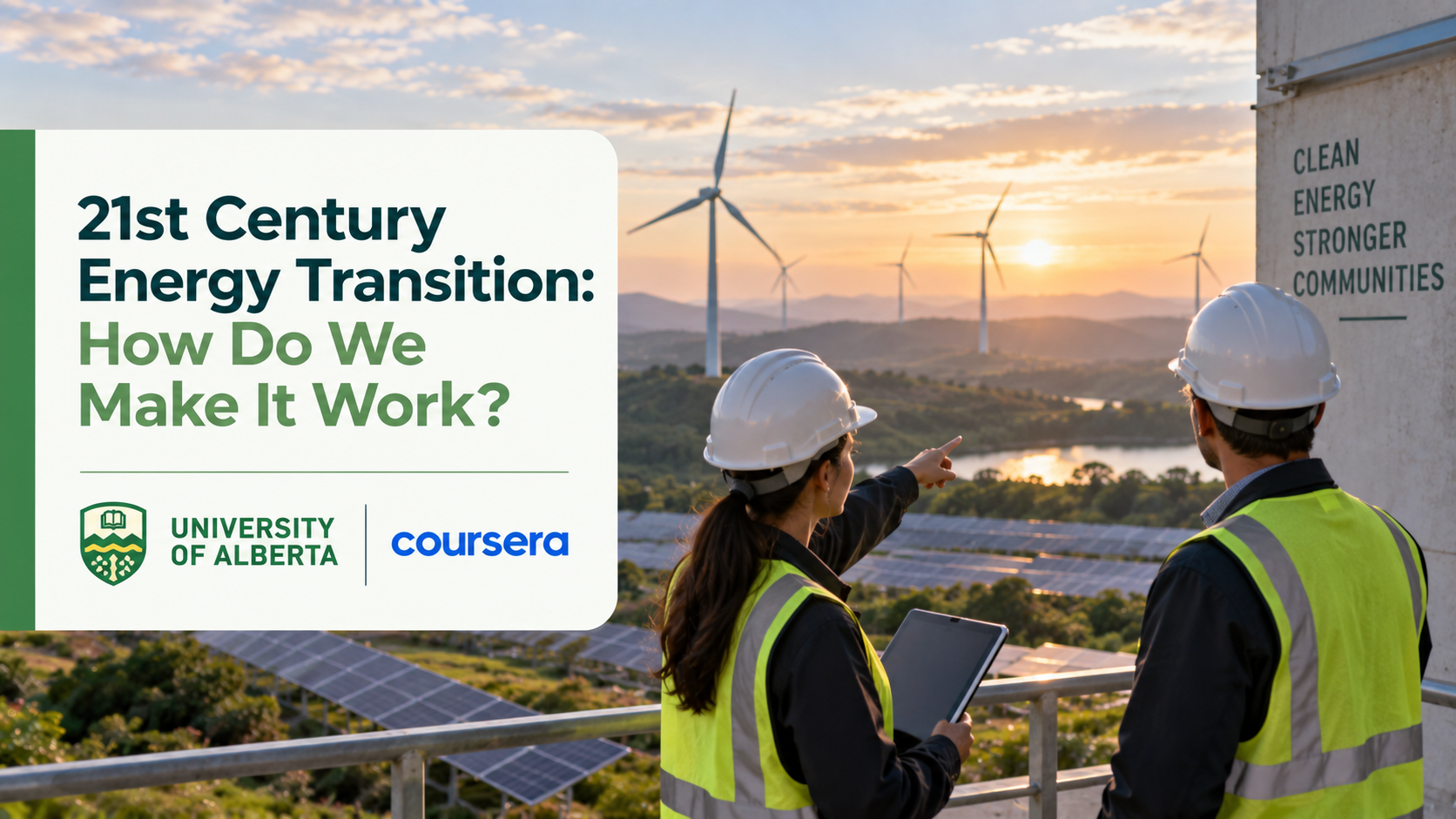
21st Century Energy Transition: How Do We Make It Work?
Difficulty Level
Beginner
Certification
Yes
Ongoing
Offered By
University of Alberta
Paid
Course Details
21st Century Energy Transition: How Do We Make It Work?, offered by the University of Alberta in collaboration with the Canadian Society for Evolving Energy, is a beginner-level online course examining the practical challenges of transforming global energy systems. It explores how societies can balance energy security, affordability, climate change, environmental sustainability, and energy poverty while moving toward more diverse energy sources. The course was updated in December 2024 to reflect newer technologies and developments in the energy transition.
Core Content
The course is structured across six modules covering the history of energy transitions, major energy sources, energy storage, key transition challenges, competing transition pathways, and policy. Learners examine coal, oil, natural gas, nuclear power, hydro, wind, solar, biomass, geothermal, wave and tidal energy, electricity systems, hydrogen, carbon capture and storage, energy efficiency, supply chains, and the economics of energy production. The final modules explore how policy, market forces, technology, and differing stakeholder priorities shape the speed and direction of transition.
Key Skills
Participants will develop the ability to understand the complexity of global energy systems, compare the benefits and costs of different energy sources, and evaluate competing approaches to energy transition. The course also builds skills in energy and utilities, policy analysis, emerging technologies, climate change mitigation, sustainable technologies, environmental policy, supply and demand, trend analysis, and resource management.
Target Learners
This course is designed for students, professionals, and general learners who want a broad understanding of how the global energy transition can be achieved in practice. It is particularly relevant for those interested in energy, climate policy, sustainability, engineering, natural resources, or public policy. Coursera classifies the course as beginner level, and the University of Alberta states that there are no prerequisites.
Learning Format
Hosted on Coursera, the course is delivered in a flexible online format with six modules and an estimated completion time of two weeks at around ten hours per week. The learning experience includes videos, readings, assignments, discussion prompts, and updated content on energy technologies and transition developments. Coursera also notes that the course includes eight assignments, is taught in English with 22 language options available, and allows learners to progress at their own pace. The University of Alberta also provides free access to all six content modules, with a paid certificate option available.
Additional Benefits
The course offers practical value by presenting multiple perspectives on how quickly and through which pathways the energy transition should proceed. Rather than treating the transition as a single technical problem, it brings together technology, economics, policy, energy security, and social priorities. Instruction is led by Brad Hayes, Adjunct Professor at the University of Alberta and Outreach Director for the Canadian Society for Evolving Energy.
Browse more ESG courses and certifications to enhance your skills and knowledge.
ESG Educate
Unlocking Opportunities
Dive into the world of ESG Events, where you can discover crucial gatherings that shape the future of sustainability. From insightful conferences to interactive workshops, these events offer invaluable opportunities to stay informed, connect with industry leaders, and drive impactful change. Whether you‘re seeking to enhance your ESG strategy or stay ahead of regulatory trends, participating in these events is essential for staying at the forefront of sustainable practices and innovation. Join us in shaping a more sustainable future through knowledge sharing and collaborative action at ESG Events.